
Agent, Subagent, Workspace: what OpenClaw users actually need to understand
Agent is a role. Subagent is an isolated task instance. Workspace is often shared. The real challenge in multi-agent systems is not spinning up more agents, but coordinating execution.
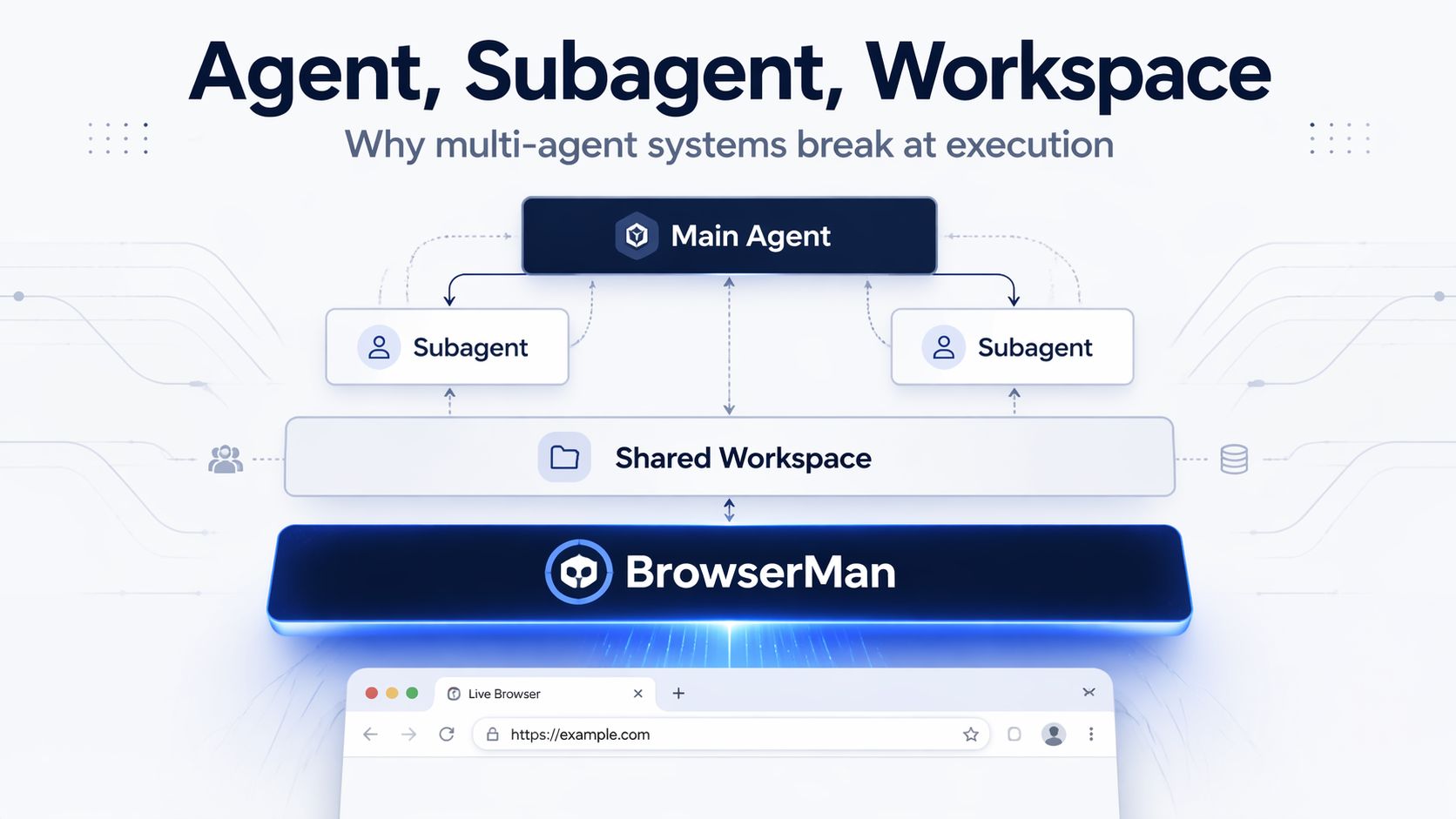
If you spend enough time with OpenClaw or any serious agent setup, you eventually hit the same vocabulary problem.
What exactly is an agent? What counts as a subagent? What is isolated, and what is shared? And why does the whole system start to feel more confusing the moment you move from toy tasks to real work?
These are not semantic questions. They shape how you split tasks, how you debug failures, and how you think about the boundary between planning and execution.
A lot of confusion comes from the fact that several different things get blurred together:
- roles
- running instances
- sessions
- workspaces
- tools
- execution environments
Once those layers get mixed, it becomes hard to reason about what your system is actually doing.
This is the clearest mental model I’ve found.
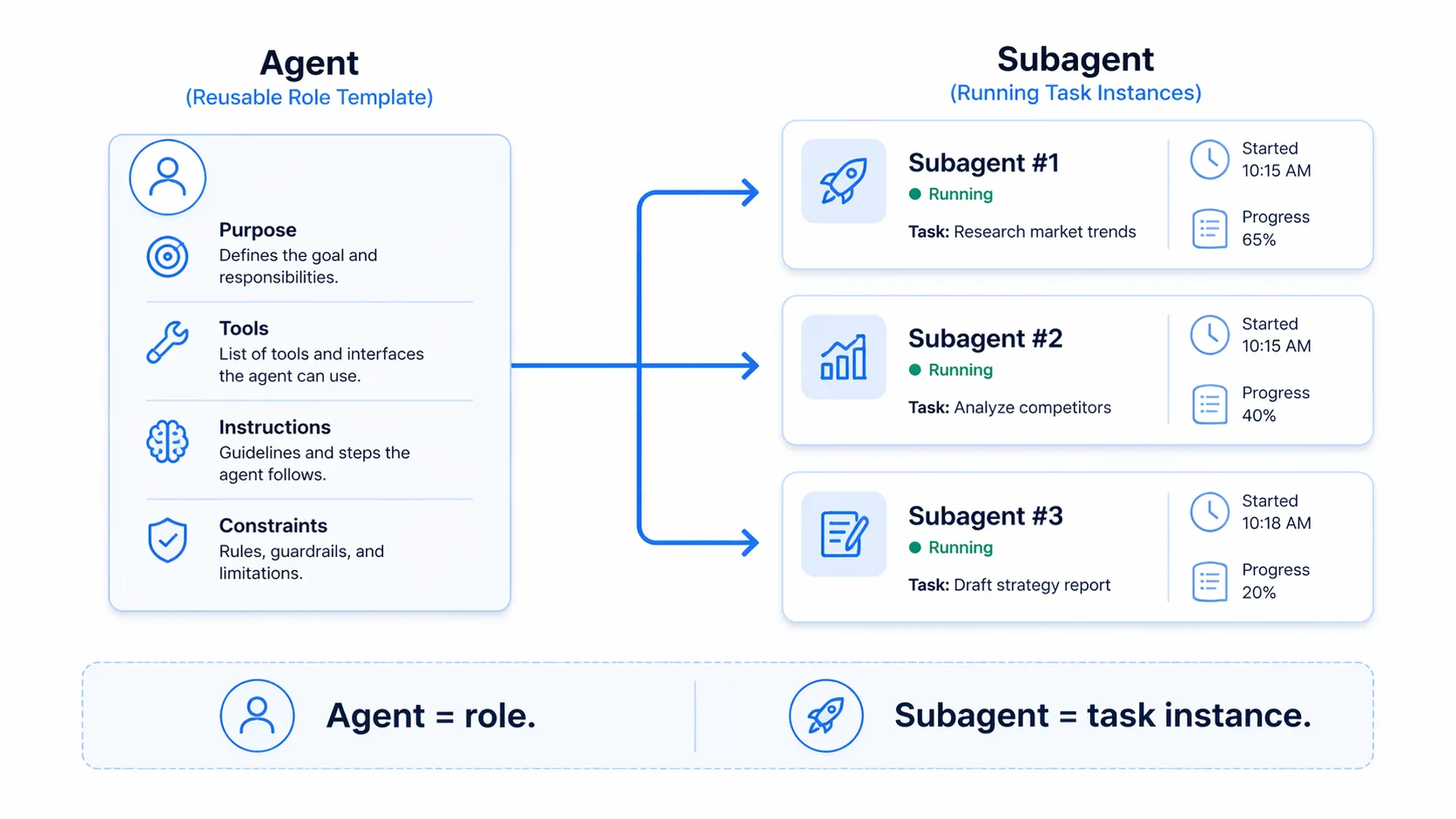
Agent is a role
The easiest mistake is to treat an agent as if it were just a single active conversation.
In practice, an agent is usually closer to a role definition.
It captures things like:
- what kinds of tasks it should handle
- what tools it can use
- what style of behavior it should follow
- what boundaries or responsibilities it has
So an agent is less like a chat thread and more like an operating profile.
That distinction matters because role and execution are not the same thing.
You can have one role that gets reused many times in different contexts. And you can have one live session that is only a temporary expression of a broader role.
Subagent is a task instance
A subagent is not a new species of agent.
It is usually just an isolated running instance created to handle a specific task.
That gives us a useful split:
- agent = role / configuration / capability boundary
- subagent = a concrete task instance launched from that broader system
A simple mental model:
- agent = job description
- subagent = the person temporarily pulled in to do one piece of work
That explains why subagents are useful even when they are not fundamentally different from the parent system.
They help because they give you:
- context isolation
- cleaner task decomposition
- parallel work
- less clutter in the main thread
In other words, the value of subagents is often operational, not mystical.
Workspace is often shared, even when context is not
This is the second thing people often misunderstand.
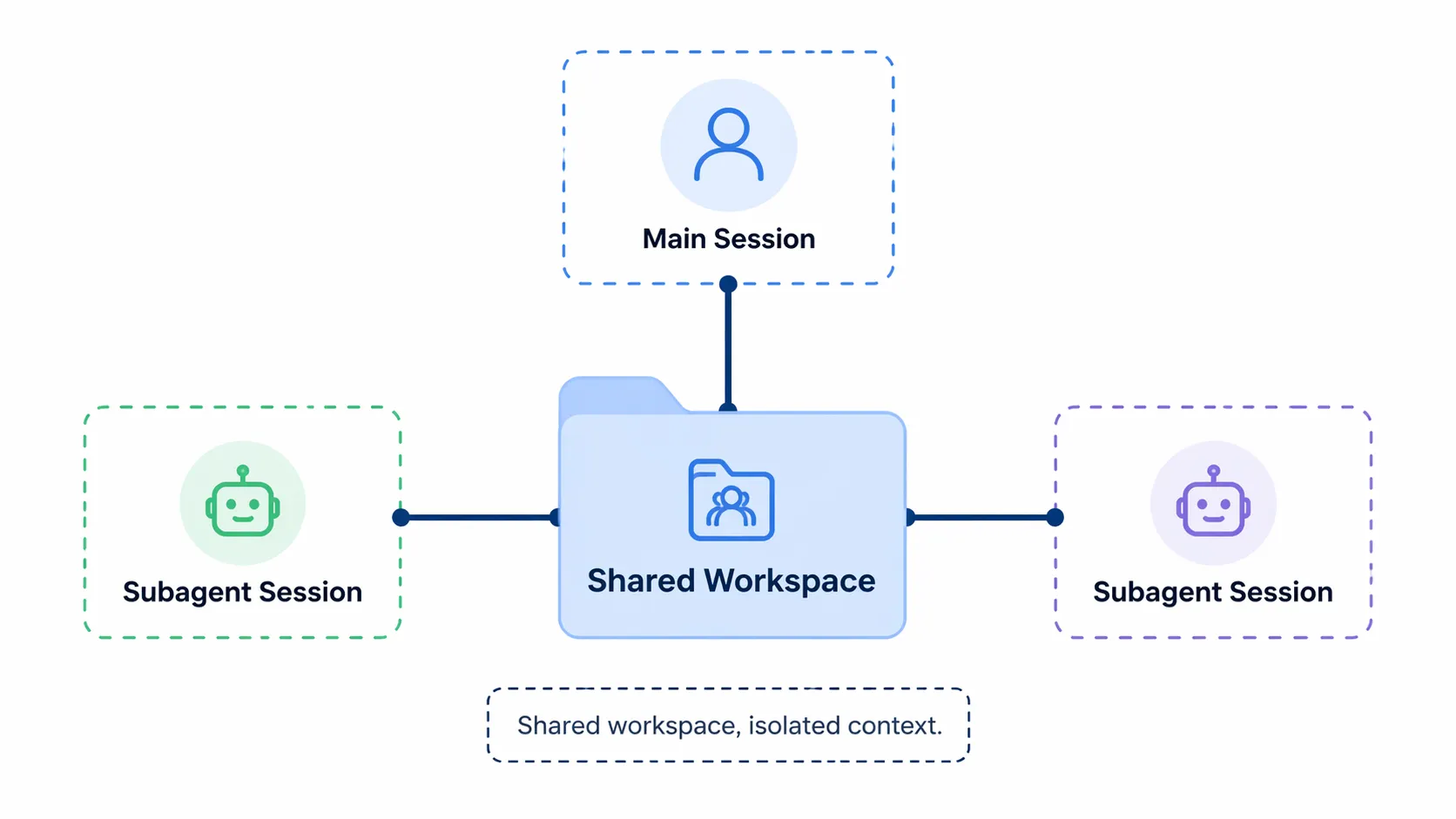
A subagent can feel independent while still operating in the same project directory.
That is not a contradiction.
In many systems, what gets isolated is not the filesystem but the working context:
- conversation state
- task lifecycle
- tool-call flow
- intermediate reasoning process
Meanwhile, the underlying workspace may still be shared.
That means two things can be true at once:
- a subagent is meaningfully isolated from the parent session
- it is still editing the same codebase or documents
Once you understand that, a lot of strange behavior starts to make sense.
You stop expecting subagents to be mini virtual machines, and start seeing them as structured task containers.
The hardest part is not spawning more agents
The popular story around multi-agent systems is often about decomposition.
One agent plans. One agent researches. One agent writes. One agent publishes. One agent handles replies.
That sounds neat, but in real workflows the main difficulty shows up somewhere else.
The hard part is not creating more agents. The hard part is coordinating execution.
Once several agents are involved, you immediately start asking deeper questions:
- what state do they share?
- what state must stay isolated?
- what tools can each one safely use?
- how do they hand off work without losing context?
- how do they act in the same environment without stepping on each other?
This is where multi-agent systems stop being a design pattern and start becoming infrastructure.
Planning is easy to separate. Execution is not.
Most agent systems are pretty good at splitting thought.
It is relatively easy to imagine a workflow where:
- one agent analyzes
- one agent drafts
- one agent summarizes
- one agent evaluates
The difficulty begins when the work depends on interacting with the outside world.
Execution introduces constraints that planning does not have:
- permissions
- authentication
- side effects
- auditability
- session continuity
- rate limits
- real UI state
This is why many multi-agent setups look elegant in diagrams and messy in practice.
They can divide reasoning, but they still struggle to coordinate action.
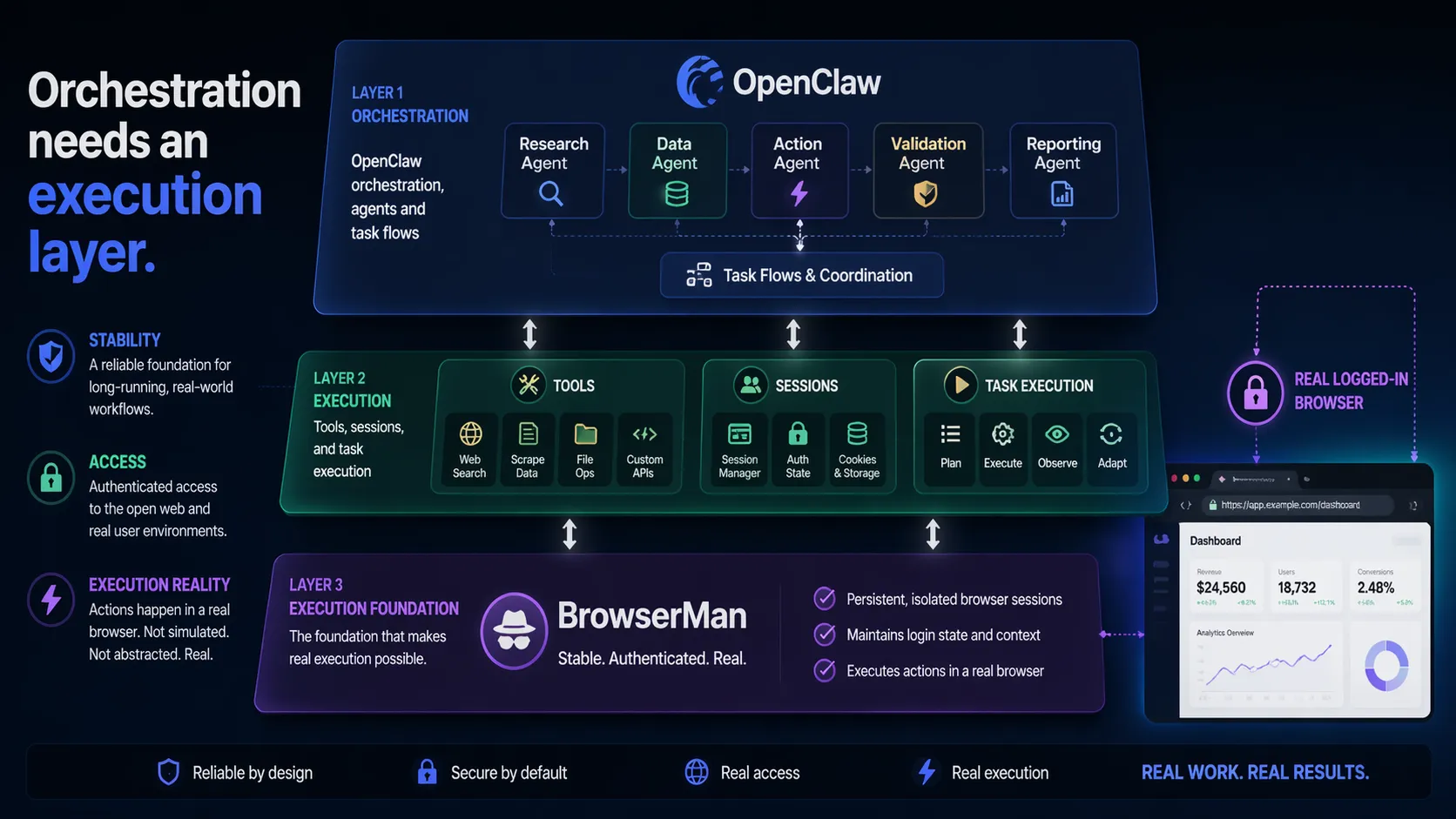
The browser is where the architecture becomes real
One place this becomes obvious is the browser.
Browsers are not just rendering surfaces. In real workflows they also hold:
- authenticated session state
- account identity
- access to tools and dashboards
- the live state of forms, feeds, and interfaces
The moment several agents need to interact with browser-based systems, a new category of problem appears.
Not “what should the agent do?” But:
- who is allowed to act?
- in which browser?
- against which account?
- under whose permissions?
- with what level of visibility or audit?
That is not a side issue. It is often the execution-layer problem in its clearest form.
A better way to think about multi-agent systems
A useful multi-agent system is not just a collection of specialized minds.
It is a system that can coordinate:
- roles
- task instances
- shared and isolated context
- execution environments
- permissions and side effects
Once you view it that way, some decisions become easier.
You stop asking only:
How many agents should I have?
And start asking:
What should be a role? What should be a task instance? What should be shared? What should be isolated? What environment actually executes the work?
Those are better questions.
They lead to more stable systems.
Why this matters for OpenClaw users
OpenClaw makes these distinctions easier to notice because it exposes the mechanics more clearly than many simpler chat-style interfaces.
You can feel when:
- a task belongs in the main session
- a task should be delegated
- a subagent helps keep context clean
- a shared workspace becomes useful
- an execution dependency starts to leak into your system design
That is a good thing.
It means the abstraction is not hiding the real problem from you.
And the real problem, most of the time, is not “how do I create more agents?”
It is “how do I make planning, delegation, and execution line up cleanly?”
Final thought
If you are still trying to get crisp on the difference between agent, subagent, session, and workspace, you are already looking at the right layer.
Because once you understand those boundaries, you start seeing why so many multi-agent systems feel powerful in demos and brittle in production.
The bottleneck is usually not intelligence. It is coordination.
And coordination gets hardest exactly where real execution begins.
One concrete example of this is browser-based work. Once agents need access to live authenticated environments, the execution layer becomes part of the architecture, not just an implementation detail. That is part of the problem space we think about a lot at BrowserMan.